Western: December 21
Roman & Syrian Catholic: July 3
Greek Orthodox: October 6
Born: Galilee
Died: 72 AD, Madras (Chennai), India
Thomas (Twin in Aramaic & Greek)
Judas Thomas
"Doubting Thomas"
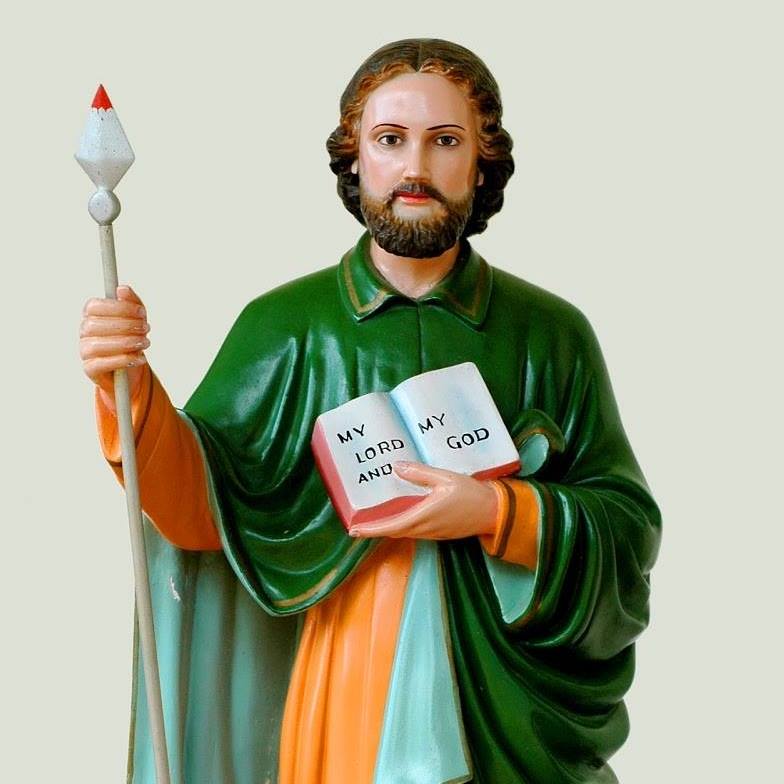
St. Thomas, one of the Twelve Apostles of Jesus Christ, holds a special place in Christian history as the founder of the Church in India. His name in Aramaic (Teʾoma) and Greek (Didymos) means "twin," and he is identified in John 11:16 as "Thomas, called the Twin."
Thomas's character is vividly portrayed in the Gospel According to John. His profound devotion to Jesus is clearly expressed in John 11:5–16: when Jesus planned to return to Judaea, the disciples warned him of the Jews' animosity, saying they were "now seeking to stone you." To this, Thomas courageously replied, "Let us also go, that we may die with him."
At the Last Supper (John 14:1–7), Thomas could not comprehend what Jesus meant when he said, "I will come again and will take you to myself, that where I am you may be also. And you know the way where I am going." Thomas's sincere question, "How can we know the way?" prompted Jesus to give one of Scripture's most profound declarations: "I am the way, and the truth, and the life."
Perhaps the best-known event in St. Thomas's life is the one from which the phrase "doubting Thomas" developed. In John 20:19–29, he was not among those disciples to whom the risen Christ first appeared. When they told the incredulous Thomas about the Resurrection, he requested physical proof, saying he would not believe unless he could touch Jesus' wounds.
When Christ reappeared and specifically asked Thomas to touch his wounds, Thomas's sudden realization of truth led him to exclaim, "My Lord and my God!" This powerful declaration made Thomas the first person to explicitly acknowledge Jesus' divinity.
According to Christian tradition, St. Thomas extended his apostolate into India, where he is recognized as the founder of the Church of the Syrian Malabar Christians, also known as the Christians of St. Thomas. The Syro-Malabar Catholic Church traces its origins directly to his evangelization efforts in India.
The apocryphal Acts of Thomas records that he visited the court of the Indo-Parthian king Gondophernes, who put him in charge of building a royal palace. According to tradition, he was a carpenter by trade. When he spent the money entrusted to him on charity instead, he was imprisoned.
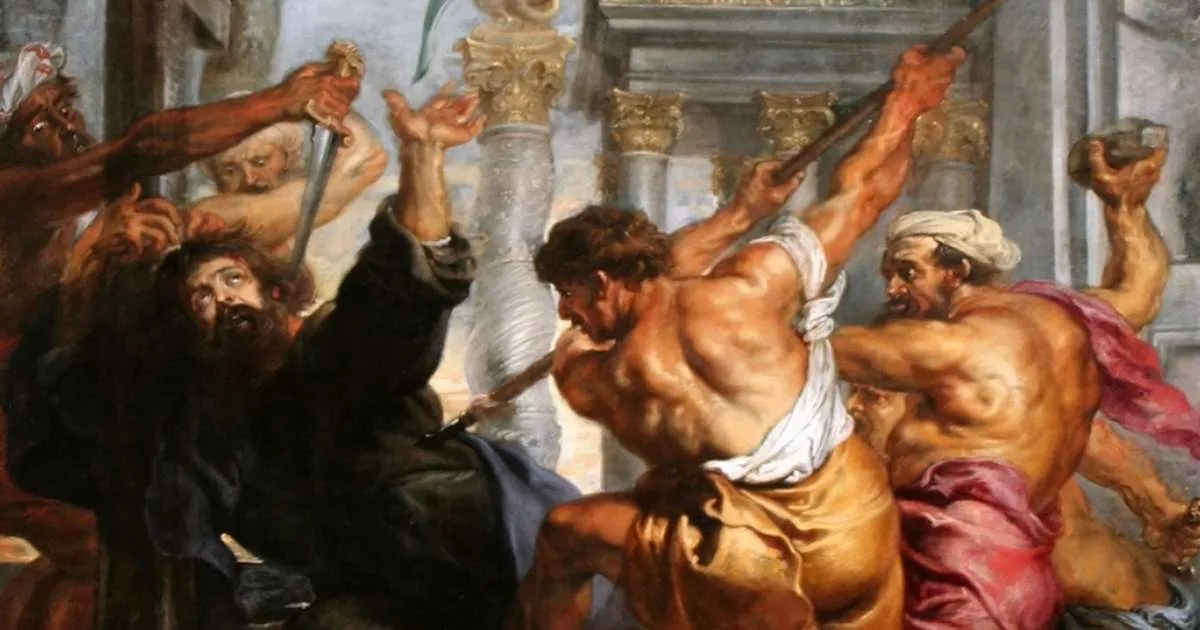
St. Thomas's martyrdom is recorded as having occurred under the king of Mylapore at Madras (now Chennai), India. San Thomé Cathedral in Chennai marks his traditional burial place, though his relics were supposedly taken to the West and finally enshrined at Ortona, Italy.
St. Thomas the Apostle's legacy lives on through the millions of Syro-Malabar Catholics worldwide who trace their spiritual ancestry to his missionary work in India nearly 2,000 years ago.
As members of the Syro-Malabar Catholic Church, we are spiritual descendants of St. Thomas the Apostle. Our Church, one of the most ancient in Christendom, was founded by St. Thomas when he brought the Gospel to India in the first century AD.
The faith that St. Thomas planted in India has flourished for nearly two millennia, maintaining its unique liturgical traditions while remaining in full communion with the Holy See. Today, the Syro-Malabar Church serves millions of faithful around the world, including our community here at Sacred Heart Syro-Malabar Church in Thunder Bay.
We honor St. Thomas not only as our spiritual father but also as a model of faith - one who moved from doubt to profound belief, and who courageously carried the message of Christ to distant lands. His legacy inspires us to live our faith with conviction and to share the Gospel with joy.
Discover the rich history and traditions of the Syro-Malabar Catholic Church